

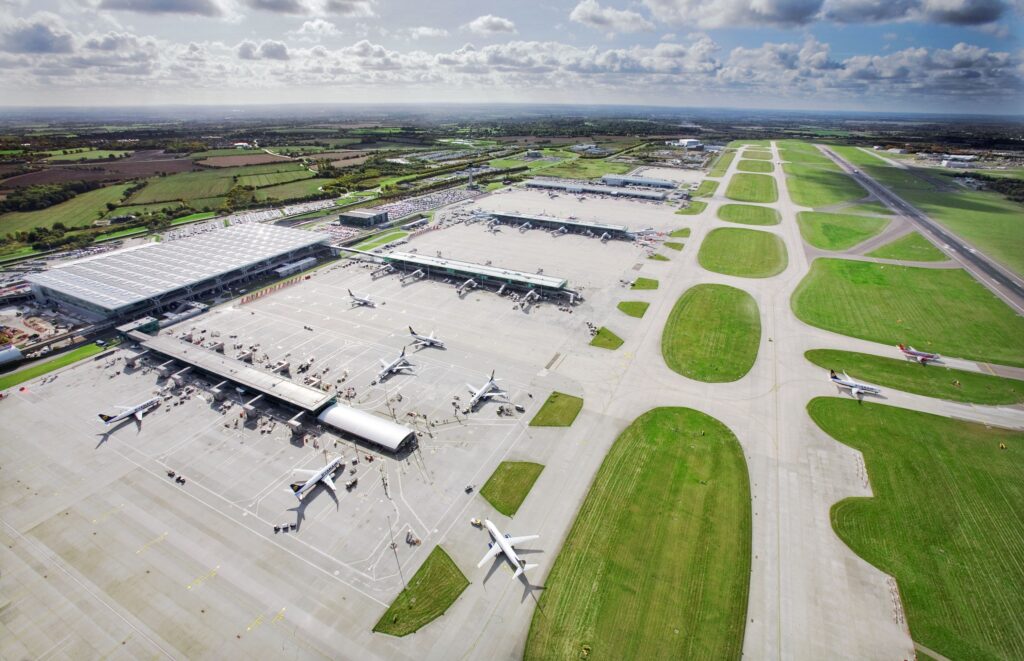
“Airports are cities in their very own proper,” says Nick Woods, CIO of Manchester Airports Group (MAG), which manages three of them: Manchester Airport, London Stanstead and East Midlands. “They’ve acquired purchasing malls of their departure lounges. They’ve acquired manufacturing crops, once you have a look at the luggage halls. They’re securing the border.”
But when they’re cities, airports are unusually targeted on operational effectivity: transferring as many passengers by as many flights, as safely and sustainably as potential. In 2019, MAG’s airports served 60 million passengers (greater than the inhabitants of Tokyo, the world’s most populous metropolis). Seventy airways shipped these passengers to 270 locations.
When Covid-19 grounded the airline trade in 2020, MAG noticed a chance to rework the digital techniques that underpin its operations. Tech Monitor caught up with Woods to listen to how an ongoing transformation of its core SAP functions, from siloed implementations to a single platform, helps the group streamline its processes, profit from its knowledge, and acquire a ‘helicopter view’ of productiveness.
Digital transformation at MAG
Digital know-how is inseparable from MAG’s ongoing pursuit of operational effectivity, explains Woods. “Nearly the whole lot’s acquired a digital play to it.”
There are 4 areas the place Woods is focusing MAG’s digital transformation efforts. The primary is “planning and optimising our airports in actual time,” Woods explains. That’s an enormous coordination effort, he says, each between the airport and different stakeholders, reminiscent of airways, air site visitors management, and floor handlers, and throughout the airport group itself – all of which relies on knowledge.
The second is utilizing AI to make sure plane will be rotated as rapidly and safely as potential. “We’re how we are able to use pc imaginative and prescient to identify defects on runways, or detect overseas objects [that] can injury an plane.”
Third is digitising equipment, reminiscent of baggage techniques and lighting gear, so power use will be optimised and upkeep predicted. One goal of this ‘sensible airport’ technique is to permit MAG to generate its personal electrical energy, Woods says.



Fourth is what Woods calls the ‘digital enterprise’. That is “all the great things that we have to run an environment friendly enterprise: automating our back-office processes, utilizing much more intelligence-led knowledge round predicting what we have to do”.
It’s this final impetus that led Woods to endure a change of MAG’s enterprise functions property. Within the run-up to the pandemic, the group had invested closely in upgrading its airport operations: “We had new terminals being constructed, we had been engaged on visitor expertise programme, we had been changing the luggage system down at Stanstead,” Woods recollects.
“However what we discovered going into the pandemic was there was an actual starvation for higher entry to knowledge that was straightforward to check throughout completely different airports,” he explains.
Modernising Manchester Airport Group’s SAP property
MAG had grown by acquisition: it acquired East Midlands airport in 2011 and Stansted in 2013. And whereas it had largely standardised on SAP for its core enterprise functions, together with SAP ERP Core Element (ECC) for finance, SAP SuccessFactors for HR, and SAP Ariba for procurement, they had been disjointed. “What we hadn’t actually achieved is consider the way it works from an end-to-end course of perspective,” Woods says.
The pandemic offered the proper alternative to treatment this. At first, the group was targeted on survival however after just a few months it turned its consideration to transformation. “As we checked out easy methods to reshape the enterprise to be the most effective it may be, there was a have to drive standardisation throughout these completely different elements of the enterprise,” he recalled. “How will we get higher entry to constant knowledge?”
Woods kicked off a change programme with the goal of getting MAG’s SAP functions operating trade best-practice processes, all from a single cloud platform.
Up to now, organisations have tended to customize enterprise functions to their particular wants, says Woods, “and we’ve been considerably responsible of that as effectively. [But] that’s constructed technical debt and complexity into techniques, which slows you down.”
“We need to transfer to a world the place we’re according to trade greatest practices, and due to this fact we are able to benefit from efficiencies and enhancements as you go alongside,” Woods explains. “Whether or not that’s clever automation or AI … you may get it out of the field quite than having to [customise] it to your individual processes.”

Transferring to a single platform, Woods provides, may even permit MAG to measure its productiveness extra successfully. Though its core functions are all SAP, “there’s various stuff that has to occur outdoors of the system, non-measurable actions like manipulating knowledge, pulling it out and doing one thing in spreadsheets after which placing it again in once more”.
In the long run-state of the present transformation, the whole lot will likely be ‘on-system,’ Woods says. “So the whole lot’s auditable, traceable and trackable, and we are able to measure productiveness rather more successfully.”
MAG is, after all, approaching this programme in levels. One early milestone was transferring its ECC implementation from IBM‘s cloud platform into AWS.
“Getting [ECC] onto the fitting platform and [retiring the] legacy cloud platform that we didn’t want permits us to ship a stage of value saving, some resilience and effectivity, but additionally supplies us the platform on which to construct.” The group hosts lots of its knowledge platforms in AWS, so transferring its finance app onto Amazon’s platform conferred connectivity and efficiency benefits, Woods explains.
The migration passed off two weeks earlier than the tip of MAG’s monetary 12 months, however preparation and testing gave the group the arrogance to make the change. “There was an enormous quantity of management and governance,” Woods explains, “with pre-migration testing after which post-migration testing, together with our auditors coming in and giving it a superb as soon as over.”
Upgrading to S/4HANA
The subsequent step is to revamp the corporate’s finance processes prepared for an improve to S/4HANA, the most recent iteration of SAP’s core ERP product. To take action, the businesses introduced immediately, MAG will likely be utilizing RISE with SAP, the software program vendor’s ‘business-transformation-as-a-service’ suite, which incorporates course of intelligence instruments in addition to technical migration assist providers.
This order of continuing – AWS migration, then course of redesign, then S/4HANA improve – reduces the chance within the programme, Woods explains.
“There’s a entire load of enterprise transformation that we have to do – simplifying our finance processes, greatest observe enterprise course of automation – and that stuff takes time,” he says. “You don’t need to be doing advanced technical and knowledge migration concurrently you’re in advanced enterprise change transformation as effectively.”
For any CIOs contemplating an analogous journey, Woods’ recommendation is to get your knowledge so as first. “Any know-how individual that’s achieved migrations previously is aware of that that knowledge is king,” he says. “There may be completely worth in investing the time upfront in ensuring your knowledge is in pretty much as good a state as potential, in order that once you migrate it throughout, you’ve acquired a clear surroundings.”
“If there’s crap in there within the first place, there’s no level migrating that crap into the brand new system. Get it proper first: that might be my greatest advice.”
Learn extra: How automation and agility helped DHL Provide Chain maintain items transferring within the pandemic
Related posts:
 DARPA Probing Quantum Computing Capabilities
 Scholarships for STEM topics: Fund your future in STEM
 The best way to get faculty credit score for work expertise
 Dell Inspiron 14 2-in-1 evaluate: Disappointing total
 Recession-fearing traders hold slashing fastest-growing cloud shares
 Chicago community plans to transform computing, drugs, cybersecurity
 How an Proprietor Enabled Provide Chain Can Convey Transparency
 Quantum community between two nationwide labs achieves file synch